Incofin signs Belgian partnership ‘Beyond Chocolate’ for 100% sustainable chocolate by 2025

Beyond Chocolate

news

Incofin signed the partnership ‘Beyond Chocolate’; Belgian’s first big charter in collaboration with Belgian chocolate- and retail business, civil society organizations, social impact investors and universities to make chocolate more sustainable. The partnership is supported by the Belgian Minister of Development Cooperation Alexander De Croo (Open Vld).

Incofin signs Belgian partnership ‘Beyond Chocolate’ for 100% sustainable chocolate by 2025

Incofin Investment Management (Incofin) signed the partnership ‘Beyond Chocolate’; Belgian’s first big charter in collaboration with Belgian chocolate- and retail business, civil society organizations, social impact investors and universities to make chocolate more sustainable. The partnership is supported by the Belgian Minister of Development Cooperation Alexander De Croo (Open Vld).

Beyond Chocolate

The Partnership for sustainable Belgian Chocolate aims to sustainably improve the living standards of cocoa producers and their families. All signatories will collaborate on tackling a number of challenges such as child labour, deforestation, minimum income, gender equality and quality education to make chocolate 100% sustainable. Alexander De Croo is happy about this joint effort and says: “We all enjoy our good Belgian chocolate, which globally has a leading reputation in terms of quality. By giving more attention to sustainability, we make our chocolate taste even better.”

With the Fairtrade Access Fund (FAF), Incofin already contributes significantly to these challenges in the cocoa industry. The fund invested over USD 8 million in Fairtrade and UTZ certified cocoa producers, some of which are also organic, in Côte d’Ivoire, Uganda and Colombia. Incofin commits with this partnership to maintain, and if possible, increase its exposure to the certified cocoa productivity value chain. The FAF’s mission is to serve the financing needs of smallholder farmers, agro SMEs and agro MFIs while promoting a sustainable food system for the world. By investing up to 20% of its portfolio in cocoa the fund aims to protect cocoa farmers and increase the profit potential of their produce.

Beyond Chocolate

The ‘Beyond Chocolate’ Partnership for sustainable Belgian chocolate has the following goals:

  • By 2025 all Belgian chocolate needs to comply to at least one of the relevant certificates such as Fairtrade, Rainforest Alliance, UTZ and organic, and/or produced with cocoa from an independent sustainability program. Also the Cocoa & Forests Initiative will need to be fully respected by then.
  • Deforestation as a consequence of chocolate production for Belgium needs to be stopped by 2030, and all cocoa producers will have to earn at least a living income.

‘Beyond Chocolate’ builds further on the existing Belgian SDG Charter for International Development that was launched two years ago. This Charter gathers the private sector, civil society organizations and government around the 17 Sustainable Development Goals of the United Nations.

About Incofin

Incofin Investment Management (www.incofin.com) is a global independent impact investment firm, focused on rural and agricultural finance, driven by a desire to promote inclusive progress. It is an AIFM licensed fund manager and has over USD 1 billion in assets under management.  Incofin has a team of more than 50 professionals spread over the headquarters in Belgium and local investment teams in India, Colombia, Kenya and Cambodia.

Contact details

Investor Relations
investorrelations@incofin.com
The FAF diversifies its portfolio in DR Congo

Coffee cooperative

news

Incofin Investment Management (Incofin) is pleased to announce the first successful investment of the Fairtrade Access Fund (FAF) in East DR Congo.

The FAF diversifies its portfolio in DR Congo

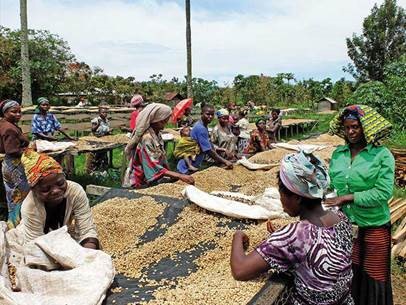
Incofin Investment Management (Incofin) is pleased to announce the first successful investment of the Fairtrade Access Fund (FAF) in East DR Congo. The FAF invested USD 300.000 in a coffee cooperative. Operating in this region of Congo is particularly challenging because of the unpredictable political situation. In fact, FAF is one of the very few international creditors available in this region.

Coffee farmer

The coffee cooperative groups about 12.000 very small organic coffee farmers, with less then 1 hectare of land, in post-conflict Kivu. The organization mobilizes and structures the small coffee farmers through the production of well-marked, certified quality coffee. In doing so, the cooperative provides support through continuous training of farmers, rejuvenation of plantations, the collection and processing of production and the equitable sharing of social premiums.

The cooperative, as many African coffee producers, taps into the “high-value” market segment of  specialty  coffees,  which  are  characterized  by  specific  taste  profiles  and  are  sold  in  small batches, usually to smaller roasters. The coffee in this region is rated among the world highest cupping quality, produced entirely from trees in the Bourbon variety of Arabica. The coffee is wet-processed or ‘washed’, meaning the fruit skin and pulp are removed from the beans immediately after harvesting and before drying.

The coffee cooperative is FLO, Organic, UTZ and SPP certified. The coffee is sold to buyers in Germany, the USA, France and Belgium, amongst others.

The GIIN publishes its ‘Financing the Sustainable Development Goals’ report

The GIIN

news

The Global Impact Investing Network (GIIN) published a new report, Financing the Sustainable Development Goals: Impact Investing in Action, that reiterates the need for impact investors to raise and direct new capital to help meet the United Nations’ Sustainable Development Goals (SDGs) by 2030.

The GIIN publishes its ‘Financing the Sustainable Development Goals’ report

The Global Impact Investing Network (GIIN) published a new report, Financing the Sustainable Development Goals: Impact Investing in Action, that reiterates the need for impact investors to raise and direct new capital to help meet the United Nations’ Sustainable Development Goals (SDGs) by 2030. With an estimated $5-7 trillion needed annually to achieve the goals, it is clear that more capital, deployed by investors whose aims align with these goals, is an absolute requirement.

The GIIN

Incofin has been featured to illustrate the evolution of increasingly sophisticated and targeted approaches by investors directing capital towards the UN SDGs. To illustrate this, Incofin incorporated a case study from de Los Andes Cooperativa, a client of the Fairtrade Access Fund in Colombia. Amit Bouri, CEO and Co-Founder of the GIIN says: “Through these case studies, we are highlighting investors and their strategic approaches to the SDGs, which we hope will inspire those in the investment community to consider how they too can take active roles in helping achieve these goals.”

Incofin incorporated the SDGs into its due diligence and investment management process across all its managed and advised funds, and has made 60 investments globally that target market-rate returns while pursuing these aims. Togo O’Brien, Corporate Development Manager of Incofin says: “The response from our investors regarding our application of the SDGs has been overwhelmingly positive. They appreciate that we don’t just communicate on the SDGs on a superficial level. By mapping each indicator to a SDG target, we are able to substantiate our alignment and contribution to the SDGs in a practical and tangible way. We’re not just saying we align with the SDGs, but we’re showing how.”

Download the full report here. 

CSAF publishes its “State of the Sector 2018” Report

CSAF

news

Drawing upon data and insights from the portfolios of 12 financial institutions, the Council on Smallholder Agricultural Finance (CSAF) published its “State of the Sector 2018” Report.

CSAF publishes its “State of the Sector 2018” Report

Drawing upon data and insights from the portfolios of 12 financial institutions, the Council on Smallholder Agricultural Finance (CSAF) published its “State of the Sector 2018” Report. Last year, Incofin Investment Management and the 11 other CSAF members collectively provided $716 million in loans to 794 agricultural SMEs around the world. This just-released “State of the Sector” Report explores trends, opportunities, and challenges for unlocking agricultural financing at the scale required to meet demand.

CSAF

Incofin IM, manager of the Fairtrade Access Fund (FAF), is a member of the CSAF. The FAF published its first Intelligence Report this year, regarding the Brazil nut sector in Bolivia. A summary is given in the “State of the Sector 2018” Report on page 15. Incofin has provided financing and advisory services to four Brazil nut enterprises (representing 385 Brazil nut collectors and employing 1,240 staff in their processing facilities). Brazil nuts are collected in primary forests. The Brazil nut market is vulnerable to changing climate patterns and human-driven deforestation. No industrial-scale Brazil nut plantations exist, despite growing demand for this “superfood” in the US and Europe. As many indigenous Amazonian communities depend on the Brazil nut harvest for their livelihoods, they have a strong incentive to preserve the forest environment and keep others from encroaching due to logging or mining.

Download the “State of the Sector 2018” Report here

FAF TAF is making great progress

FAF TAF

news

It was a successful first half of the year for the Technical Assistance Facility of the Fairtrade Access Fund (FAF TAF), managed by Incofin Investment Management (Incofin IM).

FAF TAF is making great progress

It was a successful first half of the year for the Technical Assistance Facility of the Fairtrade Access Fund (FAF TAF), managed by Incofin Investment Management (Incofin IM). On June 27th, the FAF TAF Committee, represented by Fairtrade International and Incofin IM on behalf of the FAF Fund and its donors – KfW and FMO – approved four new projects:

FAF TAF
  1. COMSA, Honduras: support in organic fertilizer production to increase the cooperative’s financial sustainability, minimize the negative environmental impacts of coffee production and encourage farm diversification
  2. FECCEG, Guatemala: strengthening profitability of key business lines (incl. organic honey and sugar cane), developing a strategy to provide fair and responsible financing to members
  3. Prosperidad de Chirinos, Peru: improving capacities in soil/crop rehabilitation and quality control (in support to the FAF long-term investment to finance the construction of solar dryers on members’ farms)
  4. Ten Senses, Kenya: introducing software and mobile application to improve farmer productivity and support the profitability of Ten Senses’ cashew business.

This adds to the thematic and geographical variety of the TAF, which is now active in 10 countries. Since the beginning of 2018, the TAF has grown with 6 new projects and disbursed a record of USD 176.000 for the benefit of 10 FAF investees, reaching out to over 34.000 smallholder farmers. The TAF successfully finalized a project with COSURCA (Colombia) to help coffee farmers whose livelihoods are under threat from climate change to begin producing organic cacao in order to diversify their income sources. Through this project, 108 family farms have been diversified and 54,000 organic cacao tress planted. This is a great example of how the TAF is advancing the mission of the Fund through the provision of tailored capacity building support to its investees aimed at creating a fair, sustainable and inclusive agricultural sector, where the smallholders can maximize their potential to live a better and happier life.